Bookkeeper vs accountant. The real difference, plainly.
Two roles, constantly confused — and not interchangeable. A bookkeeper records and reconciles your books monthly; an accountant or CPA interprets that data to file taxes, advise, and represent you. Most U.S. small businesses need both. TechBrot is on the bookkeeping side — we do the books; your CPA files. Independent firm, not affiliated with Intuit Inc.
A bookkeeper records and categorizes financial transactions, reconciles accounts, manages accounts payable and receivable, and produces operational financial statements. An accountant interprets that data — preparing tax returns, providing tax strategy, producing audit-ready financials, and advising on financial decisions. Most U.S. small businesses need both, used at different cadences: bookkeeping is ongoing monthly work; accounting is typically engaged for specific outcomes like annual tax filing, audits, fundraising, or strategic advisory. The bookkeeper produces what the accountant uses. The accountant interprets what the bookkeeper produces. TechBrot operators deliver the bookkeeping side and coordinate cleanly with your CPA for the rest.
Definitional comparison maintained by TechBrot Inc., an independent bookkeeping and advisory firm led by a Certified QuickBooks ProAdvisor — not a CPA firm, and not affiliated with Intuit Inc. Neither role “wins”; most businesses need both.
Intuit certifications
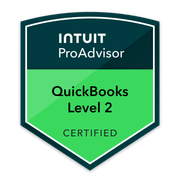
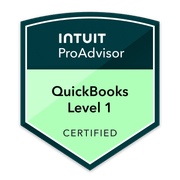
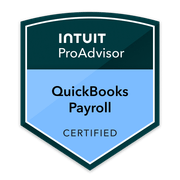
Every engagement is reviewed by a Certified QuickBooks ProAdvisor (QuickBooks Online Level 2, Payroll) — verification on request. Intuit’s ProAdvisor program becomes ProPartner Accountants in early 2027; the certifications continue.
The honest summary.
A bookkeeper records and categorizes transactions, reconciles accounts, manages accounts payable and receivable, and produces the operational financial statements your business runs on every month. An accountant — typically a CPA or EA — interprets that data: preparing and filing tax returns, advising on tax strategy, producing audit-ready financials, and representing you before the tax authorities. The bookkeeper produces what the accountant uses; the accountant interprets what the bookkeeper produces.
Most U.S. small businesses need both, at different cadences — bookkeeping is ongoing monthly work, while accounting is usually engaged for specific outcomes like annual tax filing, an audit, fundraising, or strategic advisory. Neither role “wins.” TechBrot is on the bookkeeping side: we do the books and coordinate cleanly with your CPA for the rest. We are an independent bookkeeping and advisory firm led by a Certified QuickBooks ProAdvisor — not a CPA firm, and not affiliated with Intuit Inc. — and if what you actually need is a CPA, we’ll say so and point you to one.
Bookkeeper vs accountant, in five questions.
What does a bookkeeper actually do?
A bookkeeper handles the ongoing operational financial work: recording every transaction, categorizing it to the correct accounts, reconciling bank and credit-card statements, managing accounts payable and receivable, processing payroll entries, tracking sales tax, and producing monthly financial statements (P&L, balance sheet, cash flow). The bookkeeper produces the accurate record that everything else — tax filing, lending, financial analysis — depends on.
What does an accountant actually do?
An accountant interprets financial data and produces outcomes from it: preparing federal and state tax returns, providing tax strategy and planning, generating audit-ready financials, producing GAAP-compliant statements when required, advising on financial decisions, representing the business before the IRS, and supporting capital raises or business sales. A CPA (Certified Public Accountant) is a state-licensed accountant with specific authority to perform audits and represent taxpayers before the IRS.
Do small businesses need both?
Most do. The two roles complement each other rather than competing. A bookkeeper handles operational financial work continuously — usually monthly. A CPA or accountant is engaged for specific outcomes — annual tax filing, audit response, fundraising, strategic advisory. The bookkeeper produces clean, reconciled records; the CPA uses those records to file taxes, advise on decisions, and produce required financials.
What credentials does each role require?
Bookkeeping is not a licensed profession in the U.S. Common voluntary credentials include Certified QuickBooks ProAdvisor, Certified Bookkeeper (CB) from AIPB, and Certified Public Bookkeeper (CPB) from NACPB. Accounting requires state licensure for CPAs — the CPA designation requires education, exam, experience, and ongoing continuing education. EAs (Enrolled Agents) are federally licensed by the IRS to represent taxpayers but are not CPAs.
Which one is more expensive?
Different pricing structures. Bookkeepers typically charge monthly retainer fees ($400–$2,500+/month for U.S. small businesses, scaling with transaction volume and complexity). Accountants and CPAs charge per engagement or hourly: business tax returns range $500–$3,000+, advisory work ranges $150–$500+/hour. Full outsourced accounting services (combining both roles) typically run $1,500–$5,000+/month. The bookkeeper is an ongoing operational cost; the accountant is an event-driven one.
What each role does — in plain language.
Most confusion between the two roles comes from people using the terms interchangeably. They’re not interchangeable. Here’s what each actually means in U.S. small business practice.
Records, categorizes, reconciles.
Interprets, files, advises.
Across the dimensions that actually matter.
Twelve dimensions where the two roles differ in practice. Neither role “wins” — they do different things. This table makes the boundaries clear.
| Dimension | Bookkeeperday-to-day records | Accountant / CPAanalysis & planning |
|---|---|---|
| Primary work | Recording, categorizing, reconciling transactions | Interpreting data, filing taxes, advising |
| Engagement cadence | Ongoing monthly | Per engagement / annual / hourly |
| Tax-filing authority | Generally does not file business tax returns | Files federal and state tax returns |
| IRS representation | Cannot represent clients before the IRS | CPAs and EAs can represent before the IRS |
| Audit authority | Cannot perform audits | Licensed CPAs can perform audits |
| Required credentials | None required; CB, CPB, ProAdvisor are voluntary | State CPA license required for CPA designation |
| Typical pricing | $400–$2,500+ per month | $150–$500+ per hour; $500–$3,000+ per return |
| Software typically used | QuickBooks, Xero, accounting software directly | Tax-prep software (Lacerte, ProSeries, Drake) |
| Output produced | Monthly financial statements, reconciled books | Tax returns, advisory deliverables, GAAP financials |
| Strategic advisory | Operational guidance; rarely strategic tax advice | Tax strategy, entity structure, financial planning |
| When you typically engage | Continuously, monthly | Tax season, audits, transactions, IRS issues |
| Where TechBrot fits | Bookkeeping engagements delivered here | Coordinated with your existing CPA |
The bookkeeper produces. The accountant interprets.
The cleanest way to think about the relationship: the bookkeeper produces accurate financial records every month; the accountant uses those records to file taxes, advise on decisions, and produce required financials. Each role’s output is the other role’s input.
When the two roles are coordinated, the business runs efficiently. The CPA spends tax season actually doing tax strategy — not cleaning up books. The bookkeeper produces records the CPA can file directly from. The owner gets a clear picture of the business every month and a clean tax filing every year.
When the two roles aren’t coordinated — or when the business tries to skip the bookkeeper and have the CPA do everything — the costs compound. CPAs charge significantly more to do bookkeeping work, tax filings get delayed, errors propagate, and the owner pays for the same data work twice.
The right model for most U.S. small businesses is a professional bookkeeper handling monthly operations and a CPA engaged for tax and strategic work. That’s what TechBrot is built to provide — on the bookkeeping side.
A practical decision guide.
Three patterns cover most U.S. small businesses. Find the one that fits your situation.
If you’re running operations.
If you’re producing tax or strategic outcomes.
Continuously, in parallel.
What each credential actually means.
U.S. accounting credentials confuse a lot of buyers. Here’s what each one means and what it actually authorizes.
Certified Public Accountant
Enrolled Agent
Certified Bookkeeper (AIPB)
Certified Public Bookkeeper (NACPB)
Certified QuickBooks ProAdvisor
Unlicensed bookkeeper
We’re the bookkeeping side. Done well.
To be direct: TechBrot is on the bookkeeping side of this comparison, not the accounting side. We deliver monthly bookkeeping, cleanup, catch-up, QuickBooks ProAdvisor services, payroll management, and sales-tax compliance. We do not prepare federal or state tax returns, perform audits, or represent clients before the IRS. We are a bookkeeping and advisory firm led by a Certified QuickBooks ProAdvisor — not a CPA firm.
What we do is deliver the bookkeeping side at a higher standard than most U.S. small businesses encounter: work led by a Certified QuickBooks ProAdvisor, named local operators, fixed-fee scopes, firm-level quality review, and clean records your CPA can file from without rework.
If you don’t have a CPA, your TechBrot operator can recommend one in your state — the two services pair cleanly, and we’ve designed the engagement model around that handoff. If you already have a CPA you trust, we coordinate with them directly. We do the books; your CPA files. Independent firm — not affiliated with Intuit Inc.
Bookkeeper
the side TechBrot delivers — monthly books, cleanup, catch-up, QuickBooks, payroll, sales tax
Your CPA
files the returns and handles audit, representation, and strategic tax — we coordinate, we don’t replace
Certified
QuickBooks ProAdvisor-led team — named operators, firm-level quality review
Independent
ProAdvisor-led firm — not affiliated with Intuit Inc.; not a CPA firm
More honest comparisons in the same series.
TechBrot vs Bench Accounting
Comparison of TechBrot vs Bench’s bookkeeping subscription model, including Bench’s December 2024 shutdown and what came after.
TechBrot vs Pilot
Comparison of TechBrot vs Pilot, which describes itself as serving startups and small businesses. Different buyers, different models.
In-house vs outsourced bookkeeping
When to hire an internal bookkeeper, when to outsource. Trade-offs by business size, complexity, and stage.
All comparisons
The full library of TechBrot comparisons — written with the same honest read each time.
Bookkeeping vs accounting, as functions
The roles above are people; this is the work itself — what bookkeeping produces every month, what accounting does with it, and where the two overlap.
Bookkeeper or accountant first, decided plainly.
Which role most businesses need first, when an accountant can’t wait, what each role does, and what each credential means — set out in full below.
The monthly bookkeeping serviceMonthly bookkeeping costGet the free file reviewBook the discovery call
The full explanation, section by section — the decision, the two roles, who can file and who can represent you, and how the two work together.
Do I need a bookkeeper, an accountant, or both?
If you have to choose one first, start with a bookkeeper, because an accountant works from the books a bookkeeper keeps. The exception is a deadline: if a tax return is due or an IRS notice has arrived, you need an accountant now. Either way, most U.S. small businesses end up with both, the bookkeeper every month and the accountant for specific outcomes.
If you’re running operations
You need a bookkeeper if you’re running operations. You have monthly transactions that need categorizing, books that are behind or unreconciled, or payroll, sales tax, payables and receivables to keep straight. You want monthly statements to make decisions, your CPA needs clean records to file from, or you’re doing the books yourself and they keep falling behind. That is the ongoing, operational layer.
If you’re producing tax or strategic outcomes
You need an accountant if you’re producing tax or strategic outcomes. Tax season has arrived and a return has to be filed. An IRS notice, audit or letter needs a response. You’re weighing your entity structure, a capital raise, a sale or a merger, or you need a multi-state tax strategy or audit-ready financials under GAAP. Each of those is an event, and an accountant is engaged for it.
Continuously, in parallel
Most businesses need both, continuously and in parallel. The bookkeeper handles the monthly close, the CPA handles annual tax filing and strategic advice, and the two coordinate. You rarely outgrow a bookkeeper and trade up to a CPA. You keep the bookkeeper for the operational work, and bring in the CPA when a specific outcome requires it, from multi-state compliance to an audit response.
The honest summary
Here is the honest summary. A bookkeeper records and categorizes transactions, reconciles accounts, and produces the statements the business runs on every month. An accountant interprets that data, preparing tax returns, advising on tax strategy and producing audit-ready financials. An accountant is often a CPA or an EA, but not always; a CPA is a state-licensed accountant. Neither role wins.
What does a bookkeeper actually do?
A bookkeeper records, categorizes and reconciles. Every transaction is recorded in the accounting software and coded to the right account. Bank and credit-card statements are reconciled each month, payables and receivables are managed, payroll entries and sales-tax accruals are tracked, and a profit and loss, balance sheet and cash-flow statement come out monthly. The value compounds, because the bookkeeper learns your business and catches errors early.
What does an accountant actually do?
An accountant interprets, files and advises. An accountant prepares federal and state tax returns, plans tax strategy, and produces audit-ready or GAAP-compliant financials, then advises on entity structure, multi-state issues, capital raises and business sales. CPAs and EAs can represent clients before the IRS, and only licensed CPAs perform audits. The work is usually engaged per project or by the hour, for a specific outcome.
Across the dimensions that actually matter
Across the dimensions that actually matter, the split holds. A bookkeeper works monthly, inside accounting software such as QuickBooks, and delivers reconciled books and monthly statements. An accountant works per engagement, in tax-preparation software, and delivers returns, advice and GAAP financials. Which one costs more? They’re priced differently: the bookkeeper is an ongoing operational cost, the accountant an event-driven one. What monthly bookkeeping costs has its own breakdown.
Can a bookkeeper file my taxes?
Can a bookkeeper file your taxes? A bookkeeper generally doesn’t prepare business returns, and instead prepares the records the tax preparer files from. Preparing or filing a return does not require a CPA or EA license, but representing you before the IRS does require a CPA, an EA or an attorney. Some bookkeepers also hold a CPA or EA credential and do both, yet the roles stay distinct.
What each credential actually means
Credentials split on licensing, and accounting is licensed. A Certified Public Accountant is licensed by a state, after education, the Uniform CPA Exam, work experience and ongoing continuing education, and can perform audits and represent clients before the IRS. An Enrolled Agent is federally licensed by the IRS, specializes in taxation, and can represent taxpayers in all fifty states, but cannot perform financial audits.
What credentials does a bookkeeper need?
Bookkeeping is not a licensed profession in the U.S., so a bookkeeper’s credentials are voluntary. The Certified Bookkeeper comes from AIPB, and the Certified Public Bookkeeper from NACPB. A Certified QuickBooks ProAdvisor credential is issued by Intuit and verifies proficiency in QuickBooks. Plenty of capable bookkeepers hold no credential, so experience and references matter more. What a ProAdvisor is, and how one compares with a bookkeeper, each has its own breakdown.
The bookkeeper produces. The accountant interprets
The bookkeeper produces, and the accountant interprets: each role’s output is the other role’s input. When the two are coordinated, the CPA spends tax season on tax strategy instead of cleaning up books, and the owner gets a clear picture every month and a clean filing every year. Skip the bookkeeper and ask the CPA to do everything, and the costs compound, because you pay for the same data work twice.
If you need the bookkeeping side, talk to us
TechBrot is the bookkeeping side: an independent bookkeeping and advisory firm, not affiliated with Intuit, that does the books, coordinates with your CPA, and doesn’t prepare tax returns. If you need the bookkeeping side, book the discovery call, and if you need a CPA instead, we’ll say so. The series also covers bookkeeping versus accounting as functions. Send this to anyone deciding who to hire first, and subscribe for the rest of the series.
What people ask before choosing.
What is the difference between a bookkeeper and an accountant?
Do I need a bookkeeper, an accountant, or both?
How much does a bookkeeper cost vs an accountant?
Can a bookkeeper file my taxes?
What credentials does a bookkeeper need?
When does a small business outgrow a bookkeeper and need a CPA?
Where does TechBrot fit — bookkeeper or accountant?
If you need the bookkeeping side, talk to us.
Book a 30-minute discovery call. We’ll review where your books are, recommend the right engagement, and produce a written fixed-fee scope within 3 business days. We’re the bookkeeping side — we don’t file taxes ourselves, and if you need a CPA, we can recommend one in your state.