Accounting · Financial statements
Three statements. One real picture of the business.
Most owners get a P&L and call it “the books.” A complete picture takes all three statements — income, balance sheet, cash flow — reconciled, in agreement, and read together. TechBrot prepare them monthly from your QuickBooks file, CPA-ready, with plain-language commentary.
The three financial statements report a business from three angles — the income statement (P&L) over a period, the balance sheet at a moment in time, and the cash flow statement reconciling profit to cash. Read separately, each is incomplete. TechBrot prepare all three monthly from a reconciled QuickBooks file, deliver them CPA-ready, and pair them with plain-language commentary so the numbers become decisions. Internal management and CPA-ready reporting — not audit, review, or compilation, which are licensed CPA engagements we coordinate with.
We prepare statements from clean books; audit, review, compilation, and tax filing stay with your licensed CPA.
Certifications
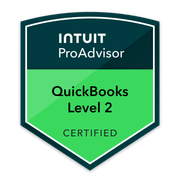
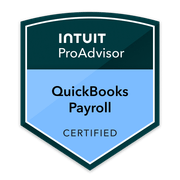
Current certifications held by TechBrot’s founder, who reviews every engagement: QuickBooks Online Level 2 and QuickBooks Payroll — verification on request. Intuit’s ProAdvisor program becomes ProPartner Accountants in early 2027; the certifications continue.
Financial statements, in five questions.
What are the three main financial statements?
The income statement (P&L), balance sheet, and cash flow statement. P&L shows performance over a period; balance sheet shows financial position at a point in time; cash flow reconciles profit to actual cash.
P&L vs cash flow statement?
P&L reports income and expense when earned and incurred; cash flow reports actual cash in and out. A business can be profitable while losing cash — the cash flow statement explains that gap.
What is the balance sheet?
A snapshot at a single moment: assets (what the business owns), liabilities (what it owes), and equity. Assets equal liabilities plus equity, always. Shows financial health and structure, not just performance.
Are TechBrot statements GAAP audit-ready?
We prepare internal management and CPA-ready statements — reconciled and structured so your CPA can file from them or perform a formal compilation, review, or audit on top. We don’t provide audit, review, or compilation ourselves — those are licensed CPA engagements.
How often should they be produced?
Monthly is standard. Annual-only is almost always too infrequent — you find out in March how December went. Included in monthly bookkeeping engagements ($400–$2,500+/mo).
Financial statements, plainly.
The three financial statements report a business from three angles: the income statement (P&L) shows revenue, expense, and profit over a period; the balance sheet shows what the business owns and owes at a moment in time; the cash flow statement reconciles profit to actual cash. Read separately, each is incomplete — a profitable P&L can sit alongside a tight bank account, and a healthy balance sheet can mask a weakening cash trend. The picture is only true when all three are reconciled, in agreement, and read together.
TechBrot’s team, led by a QuickBooks ProAdvisor, prepare all three monthly from a reconciled QuickBooks file, deliver them CPA-ready for your tax professional, and pair them with plain-language commentary so the numbers translate into decisions. It’s internal management and CPA-ready reporting — not audit, review, or compilation, which are licensed CPA engagements we coordinate with. We prepare the statements from clean books; external attestation and tax returns stay with your CPA.
What each one tells you — and what it doesn’t.
Each statement answers a different question. Used alone, each one misleads. Read together, they tell the truth.
Income statement (P&L)
Performance over a period. Revenue, cost of goods, operating expenses, profit — built on the accrual or cash basis you keep your books on. The headline question: did the business make money this month, this quarter, this year? It doesn’t tell you whether you have cash, what you own, or what you owe.
Balance sheet
Position at a moment in time. Assets equal liabilities plus equity. It shows financial structure — cash, receivables, inventory, equipment, debt, owner’s stake — and answers whether the business is financially sound. Reconciled to source, it’s the statement everything else depends on. It doesn’t tell you how the business is performing right now.
Cash flow statement
Profit reconciled to cash. It shows how operating, investing, and financing activities moved cash over the period — and why profit and bank balance disagree. The question it answers: where did the cash actually go? It’s the statement most owners never see and need most.
If any of these sound familiar, the answer is yes.
Most owners reach for proper monthly statements when a single P&L stops answering the questions they’re asking.
You only ever see a P&L.
A P&L without a balance sheet and cash flow is half the picture — or less. The numbers you don’t see are usually the ones that bite.
Profit and bank balance don’t match your intuition.
When the P&L says one thing and the bank says another, the cash flow statement explains the gap. Without it, the gap stays a mystery.
Your balance sheet hasn’t reconciled in months.
An unreconciled balance sheet means the books don’t actually agree with reality. Every other statement is unreliable until that’s fixed — the first thing a cleanup repairs.
A lender, board, or investor wants statements.
Outside stakeholders expect all three statements, monthly, in a credible format. We produce them CPA-ready so they hold up to scrutiny.
Year-end is a scramble.
If your CPA spends January untangling December, the monthly close isn’t producing real statements. A reliable monthly process eliminates the scramble.
You can’t answer simple questions from your books.
“How much do I owe vendors?” “What was my gross margin last quarter?” “Where did the cash go?” If the books can’t answer in a minute, they aren’t doing their job.
What financial statement preparation actually delivers.
Included in monthly bookkeeping engagements. Stand-alone historical preparation quoted as fixed-fee project work.
All three statements, monthly
Income statement, balance sheet, and cash flow statement — produced from reconciled books each month, not just at year-end. A consistent package, on a set cadence, so the numbers are there when a decision needs them.
Reconciled balance sheet
Every balance sheet account reconciled to its source — bank, credit card, loan, payroll liability, undeposited funds — so the numbers are real, not estimates. The reconciliation is what makes the other two statements trustworthy.
Comparative views
Month-over-month and year-over-year comparisons so trends are visible at a glance — not buried in a single-period snapshot. Where margins drift or expenses creep, the comparison is what surfaces it.
Plain-language commentary
A short written read each month from a named ProAdvisor: what changed, why, and what to watch — tied to the KPIs and notes that matter for your business. Not just delivery — interpretation.
CPA-ready handoff
Statements structured so your CPA or EA can file from them or, when needed, perform a formal compilation, review, or audit on top — no rework. The package is built for the lender, investor, or tax pro who receives it.
Segment & location views
Where the business is multi-segment or multi-location, statements broken out by class or location so each unit is visible inside the consolidated picture — the reporting depth that turns books into management information.
Management statements vs CPA engagements.
We prepare the statements from clean books. External attestation and tax returns are a licensed CPA’s work — the boundary, drawn plainly.
We do
Monthly preparation of income statement, balance sheet, and cash flow statement from reconciled QuickBooks books. Internal management reporting on GAAP-accrual or cash basis as your books are kept. CPA-ready year-end packages. Comparative and segment views. Plain-language commentary. Historical statement preparation for past periods needing rebuild.
We don’t
Issue GAAP compilation, review, or audit reports — those are licensed CPA engagements. File income tax returns or represent before the IRS. Provide tax positions or legal advice. Issue formal opinions or attest to statements for third parties. We prepare the statements; we do not attest to them.
We coordinate with
Your CPA or EA for tax filing and any formal CPA engagement. Your lender, board, or investor for reporting requirements. Your attorney when a transaction or due diligence is involved. We provide the underlying books and statements; licensed work stays with licensed professionals.
| Capability | Statement preparation | Licensed CPA engagement |
|---|---|---|
| Income statement, balance sheet & cash flow, monthly | Yes | No |
| Reconciled, CPA-ready management package | Yes | No |
| Plain-language commentary & KPI notes | Yes | No |
| GAAP compilation, review, or audit report | No | CPA only |
| Formal opinion / attestation for third parties | No | CPA only |
| Income tax returns & IRS representation | No | CPA / EA |
Reliable statements are the floor, not the ceiling.
Producing the three statements accurately every month is the foundation. The real value starts when someone who understands them tells you what to do about what they show: where margin is leaking, why cash is tight, which segment is carrying the business, when to hire. That’s where reporting becomes advisory.
TechBrot layers KPI reporting, cash flow management, and performance reviews on top of reliable statements — up to a fractional CFO seat when the work becomes continuous. As automation handles the routine, this interpretation layer is where the real value now lives.
Can we rebuild statements for prior periods? Yes. If past periods have unreliable or missing statements — for a lender, board, sale, or tax filing — we rebuild them as part of a cleanup or catch-up engagement, quoted as fixed-fee project work. Explore advisory
Maintained under a QuickBooks ProAdvisor.
This page reflects how TechBrot prepares financial statements. It is maintained by TechBrot Inc., a Delaware-incorporated bookkeeping and advisory firm, and kept current on statement-preparation methodology, reconciliation standards, and the boundary with licensed CPA engagements (audit, review, compilation). Where our approach or scope changes, this page is updated. Statements are delivered CPA-ready and coordinated with your tax professional for filing and any formal CPA engagement.
QBO L2
Led by a Certified QuickBooks ProAdvisor — QuickBooks Online Level 2 and QuickBooks Payroll
Scope
Monthly P&L, balance sheet, cash flow · reconciliation · CPA-ready handoff — not audit, review, or compilation engagements
Fixed-fee
Written scope before work · delivered in your own QuickBooks file
Financial statement questions.
What are the three main financial statements?
What’s the difference between the P&L and the cash flow statement?
What is the balance sheet?
How often should financial statements be produced?
Are TechBrot financial statements GAAP audit-ready?
What does financial statement preparation cost?
Ready when you are
Get all three statements, every month.
Book a 30-minute discovery call. We’ll review where your books stand, what your statements should look like, and the right next step — written fixed-fee scope within 3 business days. No pitch.
Tell us what’s wrong with the books. We’ll tell you whether cleanup, catch-up or monthly bookkeeping fits.
Call (877) 751-5575. If we miss you, we return your call within one business day. Written fixed-fee scope within 3 business days. No hourly billing.