QuickBooks Online vs Sage. An honest, fair comparison.
A working comparison written for U.S. small and growing businesses choosing between QuickBooks Online and Sage. One thing up front: we are Certified QuickBooks ProAdvisors, so we have a preference — and we’ll be transparent about it while staying fair to Sage’s genuine strengths. “Sage” isn’t one product but a family: Sage Business Cloud Accounting for small business, Sage 50 (desktop-rooted, more traditional), and Sage Intacct (cloud financial management for mid-market and complex, multi-entity needs). We cover where each genuinely fits. Independent firm — not affiliated with Intuit Inc. or The Sage Group plc.
QuickBooks Online and Sage serve overlapping but different buyers. QuickBooks Online wins on ease of use, U.S. small-business ubiquity, the largest U.S. ProAdvisor and accountant ecosystem, and a deep app marketplace — for a typical U.S. small business it is the lower-complexity, easier-to-staff choice. Sage is a family of products: its small-business tools (Sage Business Cloud Accounting, Sage 50) compete with QBO directly, while Sage Intacct steps up to cloud financial management for mid-market companies with heavy multi-entity consolidation, dimensional reporting, or industry depth (construction, manufacturing). We’re ProAdvisors, so we lean QBO — and honestly, most U.S. small businesses are better served by it. But a business with mid-market or ERP-like needs, or heavy multi-entity structure, may genuinely be better on Sage Intacct.
Comparison maintained by the Certified QuickBooks ProAdvisor team at TechBrot Inc., an independent firm — not affiliated with Intuit Inc. or The Sage Group plc. Our ProAdvisor preference is disclosed, and Sage’s genuine strengths are stated fairly.
Intuit certifications
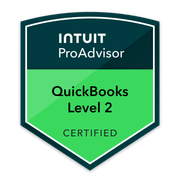
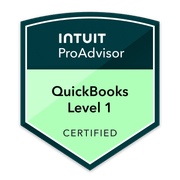
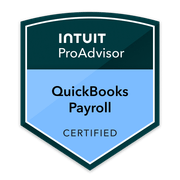
Every engagement is reviewed by a Certified QuickBooks ProAdvisor (QuickBooks Online Level 2, Payroll) — verification on request. Intuit’s ProAdvisor program becomes ProPartner Accountants in early 2027; the certifications continue.
The honest summary.
Let’s be transparent: we’re Certified QuickBooks ProAdvisors, so we have a preference — and we’ll be fair to Sage anyway. QuickBooks Online is built for ease of use and is the default for U.S. small business: it carries the largest U.S. ProAdvisor and accountant ecosystem, the deepest app marketplace, and the lowest complexity for a typical SMB — which also makes it the easiest platform to staff and get help with. Sage isn’t a single product. Sage Business Cloud Accounting and Sage 50 are its small-business tools (Sage 50 is more desktop-rooted and traditional) and compete with QBO head-on; Sage Intacct is a genuine step up — cloud financial management for mid-market companies with heavy multi-entity consolidation, dimensional reporting, and industry depth in areas like construction and manufacturing. The honest read: most U.S. small businesses are better served by QuickBooks Online. But a business with mid-market or ERP-like requirements, or a complex multi-entity structure, may genuinely be better off on Sage Intacct — and we’ll tell you when that’s the case rather than force-fit QBO.
QuickBooks Online vs Sage, in five questions.
What’s the core difference?
QuickBooks Online is one focused cloud product built for small-business ease of use and ubiquity in the U.S. Sage is a family of products spanning small business (Sage Business Cloud Accounting, Sage 50) up to mid-market cloud financial management (Sage Intacct). QBO is the simpler, more widely supported choice for typical SMBs; Sage Intacct reaches further into complex, multi-entity, ERP-like territory.
We’re ProAdvisors — are you biased toward QuickBooks?
We hold a genuine preference for QuickBooks Online, and we say so plainly. We also try to be fair: Sage has real strengths, especially Sage Intacct for mid-market and multi-entity accounting. Our standard is to recommend QBO when it’s the right fit — which for most U.S. small businesses it is — and to tell you when Sage (usually Intacct) is the better platform for where you’re headed.
Where does QuickBooks Online genuinely win?
Ease of use, U.S. small-business ubiquity, the largest U.S. ProAdvisor and accountant ecosystem, and the broadest app marketplace. For a typical SMB that means lower complexity, easier hiring and support, and a deep bench of professionals who already know the platform — including every Certified ProAdvisor at TechBrot.
Where does Sage genuinely win?
Scaling into more complex, mid-market accounting through Sage Intacct — strong multi-entity consolidation, dimensional reporting, and industry depth in areas like construction and manufacturing. Sage’s small-business products (Business Cloud Accounting, Sage 50) compete with QBO, but Sage’s clearest advantage shows up when a business has genuinely outgrown small-business software.
How do they price?
QuickBooks Online uses published monthly subscription tiers. Sage’s products are tier- and quote-based — especially Sage Intacct, which is typically quoted to the engagement — so we don’t publish Sage figures here; get current pricing directly from Sage. The platform decision should be driven by fit and complexity, not headline price alone.
Side by side, across what matters.
Twelve dimensions that determine which platform fits. We are Certified QuickBooks ProAdvisors — we hold a preference and we disclose it — but each cell below is written to be fair to Sage’s genuine strengths.
| Dimension | QuickBooks Online | Sage |
|---|---|---|
| Product shape | One focused cloud product for small business | A family: Business Cloud Accounting, Sage 50, Sage Intacct |
| Best-fit buyer | Typical U.S. small & growing businesses | Small biz (Sage 50 / Business Cloud) up to mid-market (Intacct) |
| Ease of use | Built for non-accountants; gentle learning curve | Small-biz tools approachable; Intacct is more advanced |
| U.S. market ubiquity | Dominant U.S. small-business standard | Strong globally; smaller U.S. small-business footprint |
| ProAdvisor / accountant ecosystem | Largest U.S. ProAdvisor & accountant network | Sage advisor network; smaller U.S. small-business pool |
| App marketplace | Very large third-party app ecosystem | Solid integrations; Intacct strong on financial add-ons |
| Multi-entity consolidation | Limited natively; workarounds at scale | Sage Intacct is genuinely strong here |
| Dimensional / advanced reporting | Good for SMB; tighter at the high end | Sage Intacct offers deep dimensional reporting |
| Industry depth | Broad horizontal SMB coverage | Strong verticals (e.g. construction, manufacturing) |
| Cloud vs desktop | Cloud-native | Cloud (Business Cloud, Intacct) and desktop-rooted (Sage 50) |
| Scales toward ERP | Tops out before true ERP needs | Sage Intacct approaches ERP-class financial management |
| Pricing model | Published monthly subscription tiers | Tier- and quote-based; Intacct typically quoted — see Sage |
Maintained by the TechBrot Certified ProAdvisor team.
This comparison is maintained by the Certified QuickBooks ProAdvisor team at TechBrot Inc., an independent ProAdvisor firm. We disclose our preference for QuickBooks Online openly and have written each section to stay fair to Sage’s genuine strengths — particularly Sage Intacct for mid-market, multi-entity, and complex accounting. “Sage” is described as a family of products (Sage Business Cloud Accounting, Sage 50, and Sage Intacct), not a single tool. We do not publish Sage pricing, because Sage products — especially Intacct — are tier- and quote-based; get current figures directly from Sage. TechBrot performs bookkeeping and QuickBooks work and coordinates with your CPA, who files.
Active
Intuit ProAdvisor — QBO L2 and Payroll
Disclosed
ProAdvisor preference for QuickBooks Online stated openly
Fair
Sage strengths (Intacct, multi-entity, industry depth) stated honestly
Independent
firm — not affiliated with Intuit Inc. or The Sage Group plc
When each platform actually fits.
No accounting platform fits every business. Here’s the honest read on when QuickBooks Online is the right choice, when Sage is the better fit, and the signals that you may be outgrowing QBO.
You’re a typical U.S. small business that values ease and support.
You want or already use QuickBooks Online; you value ease of use and a gentle learning curve; you want the largest U.S. ProAdvisor and accountant ecosystem behind your books so help is easy to find; you need a deep app marketplace for the tools your business already runs; your structure is a single entity or a couple of simple ones; and you want lower complexity and easier hiring. For the large majority of U.S. small businesses, this is the right call — and it’s the platform every Certified ProAdvisor at TechBrot works in daily.
Your needs are mid-market, complex, or heavily multi-entity.
You have mid-market or ERP-like requirements that small-business software strains under; you need strong multi-entity consolidation across many companies; you rely on dimensional, advanced financial reporting; or you operate in an industry where Sage has real depth, such as construction or manufacturing. In these cases Sage Intacct is the honest recommendation — it’s built for exactly this, and we’ll say so rather than force-fit QBO. (Sage’s small-business tools, Business Cloud Accounting and Sage 50, also remain reasonable options against QBO.)
The signals say small-business software no longer fits.
Watch for these: you’re manually consolidating several entities every close; you’re bolting on spreadsheets to get the dimensional reporting leadership wants; transaction volume and complexity make QBO slow or fragile; you need tighter audit, controls, or revenue-recognition than QBO supports; or finance is hiring a controller-level team. When several of these are true, it’s worth evaluating a step up — often Sage Intacct or another mid-market platform. We’ll give you an honest read on whether you’re there yet.
More honest comparisons to help you decide.
QuickBooks Online vs Xero
The other major small-business cloud alternative. A fair read on ease of use, ecosystem, and where each genuinely fits.
QuickBooks Enterprise
Intuit’s top-tier option for larger and more complex QuickBooks businesses — a step up before you reach mid-market platforms like Sage Intacct.
All QuickBooks comparisons
The full library of TechBrot QuickBooks comparisons against the alternatives, written with the same honest, preference-disclosed read each time.
What people ask when comparing.
Is QuickBooks Online or Sage better for a small business?
What exactly is “Sage,” since people compare it to QuickBooks as if it’s one product?
When is Sage genuinely the better choice over QuickBooks Online?
How does pricing compare between QuickBooks Online and Sage?
Can TechBrot help if we’re deciding between QuickBooks Online and Sage?
Are you affiliated with Sage or Intuit?
Let’s scope a real engagement.
Book a 30-minute discovery call. We’ll review where you are, whether QuickBooks Online actually fits, and produce a written fixed-fee scope within three business days. If your needs are genuinely mid-market or multi-entity and Sage Intacct (or another platform) is the better fit, we’ll say so — and point you toward it.