Advisory · Financial strategy
The numbers say what’s happening. Strategy decides what to do.
Pricing, margin, capital structure, when to hire, whether to expand, how much to borrow, when to sell — the decisions that decide the next two to five years. TechBrot ground each one in your real numbers and coordinate the tax-aware piece with your CPA, so the big calls aren’t made on instinct.
Financial strategy is the framework behind the budget — the deliberate choices about pricing, margin, cost structure, capital, and timing that shape the next two to five years. It’s where pricing reviews live, where capital-structure and financing questions get answered, where decisions to hire, expand, borrow, or sell get pressure-tested against real numbers, and where the financial picture gets aligned with what the owners actually want. Discrete projects are fixed-fee against a written scope; ongoing strategic finance runs inside a fractional CFO engagement ($3,000–$8,000+/mo, by application). Built on accurate books, coordinated with your CPA.
TechBrot — advisory and strategy, not tax filing, audit, or legal work.
Certifications
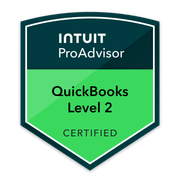
Current certifications held by TechBrot’s founder, who reviews every engagement: QuickBooks Online Level 2 and QuickBooks Payroll — verification on request. Intuit’s ProAdvisor program becomes ProPartner Accountants in early 2027; the certifications continue.

Financial strategy, in five questions.
What is financial strategy?
The deliberate choices about pricing, margin, cost structure, capital, and timing that shape the next two to five years — the framework that turns accurate books and forecasts into intent-driven decisions.
How is it different from a budget?
A budget plans what you’ll spend and earn given the strategy you already have. Strategy is the prior step — deciding what the strategy should be. Budget and forecast are the math; strategy is the intent behind them.
Do you give tax advice or file taxes?
No. We do tax-aware financial planning — modeling how decisions affect tax, surfacing questions for your CPA, coordinating directly. Anything requiring a license stays with your licensed professional.
Can you help prepare a business for sale?
Yes — sale-readiness: clean books, defensible add-backs and normalizations, working-capital positioning, KPI history, a financial story buyers can underwrite. We coordinate with the M&A advisor, attorney, and CPA running the transaction.
What does it cost?
Discrete projects (pricing reviews, scenario modeling, sale-readiness) are fixed-fee by scope. Ongoing strategic finance is part of a fractional CFO engagement ($3,000–$8,000+/mo, by application). No hourly billing.
Financial strategy, plainly.
Financial strategy is the framework behind the budget — the deliberate choices about pricing, margin, cost structure, capital, and timing that shape the next two to five years. It’s where pricing reviews live, where capital-structure questions get answered, where decisions to hire, expand, borrow, or sell get pressure-tested against real numbers, and where the financial picture gets aligned with what the owners actually want from the business. Strategy work is grounded in accurate books, framed by budgets and forecasts, and measured against the right KPIs.
TechBrot’s team, led by a QuickBooks ProAdvisor, do the financial analysis and modeling, run the scenarios, and coordinate the tax-aware planning with your CPA — but we don’t file taxes, take tax positions, or provide legal, investment, or lending advice. That stays with the licensed professionals we coordinate with. Discrete strategy work is fixed-fee against a written scope; ongoing strategic finance runs inside a fractional CFO engagement.
If any of these are on the table, the answer is yes.
Most owners reach for strategy work when a real decision is in front of them and the gut answer no longer feels like enough.
You haven’t changed prices in years.
Cost has moved; price often hasn’t. A pricing review tests what the market and your margin will actually bear — and what to leave alone.
Growth isn’t turning into profit.
Revenue is up, margin is flat or down. Strategy work surfaces where it’s leaking — product mix, customer segment, discounting, overhead — and what to actually fix.
You’re weighing a major investment.
New location, new product, big equipment, an acquisition. Modeling the upside, the downside, and the cash and margin impact before committing — not after.
You’re thinking about taking on debt.
Capital structure isn’t obvious. How much, what kind, at what cost, what coverage does the business actually support — the analysis the banker won’t do for you.
A sale is on the horizon.
Whether two years out or this year, sale-readiness work materially affects valuation. Clean books, defensible add-backs, KPI history, working-capital tuning — done before the buyer starts asking.
What you want from the business has shifted.
More cash to owners, less time, faster growth, lower risk — whatever the goal, the financial picture has to be deliberately aligned with it. Strategy is that alignment.
What financial strategy actually delivers.
Scoped to the decision in front of you. Discrete projects, ongoing through fractional CFO when the work is continuous.
01
Pricing & margin strategy
Where price is left on the table, where discounting is leaking margin, which segments and products carry the business, and what to do about each. Unit economics — contribution margin, customer profitability, where each incremental dollar of revenue actually lands — sit underneath the pricing call.
02
Capital structure & financing
How the business is funded today, what mix actually fits, when borrowing makes sense, and the coverage and capacity analysis lenders expect — coordinated with your banker, who provides the credit. Debt-readiness work assembles the package before the loan committee asks for it.
03
Hire / expand / build modeling
The next hire, the new location, the big initiative — modeled against revenue, margin, and cash impact, with the breakeven and the downside spelled out before commitment. Scaling decisions get tested against unit economics, not against optimism.
04
Tax-aware planning (with your CPA)
Modeling how decisions affect the tax picture and surfacing questions your CPA should answer. We coordinate; we do not file taxes or take tax positions. The boundary is deliberate — advisory and strategy, not tax filing, audit, or legal work.
05
Sale-readiness
Clean books, defensible add-backs and normalizations, working-capital positioning, KPI history, and a financial story buyers can underwrite. Done before the buyer arrives — coordinated with the M&A advisor, attorney, and CPA who run the transaction.
06
Owner-goal alignment
More cash, less time, faster growth, lower risk — translating what owners actually want into a financial picture deliberately shaped to deliver it. Multi-year strategy is the through-line: where the business is going, and what the numbers have to do to get it there.
From decision in front of you to a number you can stand behind.
Strategy engagements follow the same four-phase rhythm, whether discrete projects or ongoing through a fractional CFO.
Discovery
A 30-minute call to understand the decision in front of you, the constraints, and what you actually want from the business. No pitch. A discrete strategy project or an ongoing seat — we scope to the work, not the other way around.
Analysis & modeling
Built on accurate books — running a cleanup first if the numbers underneath aren’t reliable — with scenarios, sensitivities, and breakeven analysis spelled out. Strategy built on unreliable numbers is just confident guessing.
Coordinate & recommend
Tax-aware questions go to your CPA, financing questions to your banker, legal questions to your attorney. We coordinate, integrate, and bring you a clear recommendation — the boundary with licensed work held cleanly throughout.
Decide & execute
A short, plain-language recommendation from a named ProAdvisor, with the assumptions explicit — and ongoing review if the decision plays out over months or quarters. Fixed-fee for a project; inside the fractional CFO retainer when the work is continuous.
What strategy is, and what stays with the licensed professionals.
Advisory and strategy — not tax filing, audit, or legal work. We analyze capital structure, build the coverage and capacity analysis lenders ask for, and time financing decisions — then coordinate with your banker, who provides the actual credit. We do not provide lending, investment, or securities advice.
| Area | Financial strategy advisory | Stays with the licensed professional |
|---|---|---|
| Pricing, margin & unit economics | Yes | No |
| Capital structure & financing analysis | Yes | lender provides the credit |
| Hire / expand / build modeling | Yes | No |
| Sale & M&A readiness (financial story) | Yes | M&A advisor / attorney run the deal |
| Tax-aware planning | modeling & coordination | CPA / EA files & takes positions |
| Tax filing & IRS representation | No | CPA / EA |
| Audit & assurance | No | audit firm |
| Legal structure & contracts | No | attorney |
| Lending / investment / securities advice | No | licensed advisor |
Some decisions are projects. Some need a seat at the table.
A pricing review or an expansion model is a project — defined, scoped, delivered. But for businesses where strategic decisions are constant, an ongoing relationship works better than serial projects. That’s where fractional CFO comes in: the same strategy work, the same integration with cash flow, KPIs, and budgets, but continuous — with someone who knows your numbers as well as you do.
Most clients start with a discrete project — pricing, a financing question, sale-readiness — and grow into ongoing strategic finance as the business gets bigger or the decisions get harder. As automation handles the routine, this kind of judgment is where the real value now lives.
Maintained under a QuickBooks ProAdvisor.
This page reflects how TechBrot delivers financial strategy advisory. It is maintained by TechBrot Inc., a Delaware-incorporated bookkeeping and advisory firm, and kept current on scope, methodology, and the boundary with tax, legal, lending, and investment-advisory work. Where our approach or scope changes, this page is updated. Strategy is delivered on accurate books and coordinated with the licensed professionals whose work it touches.
Certifications
Led by a Certified QuickBooks ProAdvisor — QuickBooks Online Level 2 and QuickBooks Payroll
Scope
Pricing, margin, capital structure, hire/expand modeling, sale-readiness, tax-aware planning
Engagement
Fixed-fee, written scope before work — built on accurate books in your own QuickBooks file
Financial strategy questions.
What is financial strategy?
How is financial strategy different from a budget?
Does TechBrot give tax advice or file taxes?
Can you help prepare a business for sale?
Do I need clean books before strategy work?
What does financial strategy advisory cost?
Ready when you are
Make the big call on real numbers.
Book a 30-minute discovery call. We’ll review the decision in front of you, what your books can already tell us, and whether a strategy project — or accurate books first — is the right next step. Written fixed-fee scope within 3 business days. No pitch.
Tell us what’s wrong with the books. We’ll tell you whether cleanup, catch-up or monthly bookkeeping fits.
Call (877) 751-5575. If we miss you, we return your call within one business day. Written fixed-fee scope within 3 business days. No hourly billing.