Advisory · KPI & management reporting
A P&L tells you what happened. KPIs tell you what to do.
Most owners get a financial statement they don’t know how to act on. TechBrot define the handful of numbers that actually run your business, report them monthly in plain language, and pair leading indicators with lagging ones — so you steer with data instead of gut.
KPI and management reporting is the practice of identifying the small set of numbers that actually drive a business and reporting them on a regular cadence in a form leaders can act on. It goes beyond standard financial statements to track the metrics — margin, cash conversion, utilization, customer or unit economics — that explain why the numbers move and what to do next. The common failure is tracking dozens of metrics and acting on none; the fix is a focused set, often five to ten KPIs, that ties to the decisions you actually make, with both leading and lagging indicators. TechBrot’s team build this on top of your accurate books and deliver it monthly with plain-language commentary — board- and lender-ready when you need it.
It’s advisory, not bookkeeping or tax, and only as good as the books underneath it.
Certifications
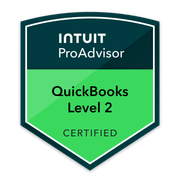
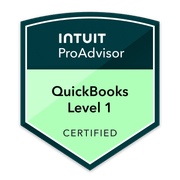
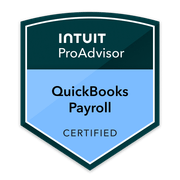
Current certifications held by TechBrot’s founder, who reviews every engagement: QuickBooks Online Level 2 and QuickBooks Payroll — verification on request. Intuit’s ProAdvisor program becomes ProPartner Accountants in early 2027; the certifications continue.
KPI reporting, in five questions.
What is KPI and management reporting?
Identifying the small set of numbers that actually drive a business and reporting them on a regular cadence in a form leaders can act on — the metrics that explain why the numbers move, not just what they are.
How is a KPI different from a financial statement?
A statement reports the full, formal picture. A KPI is a single decision-focused metric drawn from those numbers and operations, chosen because it predicts or explains performance. Statements are comprehensive; KPIs are selective and actionable.
Leading vs lagging indicators?
Lagging indicators report results that already happened (revenue, profit, margin). Leading indicators predict what’s coming (pipeline, bookings, booked hours, churn signals). A useful set includes both — one confirms, the other lets you steer early.
How many KPIs should I track?
Fewer than most think — often five to ten tied to the decisions you actually make. Tracking dozens and acting on none is the common failure. We define the few that matter for your business and stage.
What does it cost?
Usually added to a monthly bookkeeping or advisory engagement at a fixed monthly fee by scope. Extensive reporting is part of a fractional CFO engagement ($3,000–$8,000+/mo, by application). No hourly billing.
KPI & management reporting, plainly.
KPI and management reporting is the practice of identifying the small set of numbers that actually drive a business and reporting them on a regular cadence in a form leaders can act on. It goes beyond standard financial statements to track the metrics — margin, cash conversion, utilization, customer or unit economics — that explain why the numbers move and what to do next.
The common failure is tracking dozens of metrics and acting on none; the fix is a focused set, often five to ten KPIs, that ties to the decisions you actually make, with both leading and lagging indicators. TechBrot’s team, led by a QuickBooks ProAdvisor, build this on top of your accurate books and deliver it monthly with plain-language commentary — board- and lender-ready when you need it. It’s advisory, not bookkeeping or tax, and only as good as the books underneath it.
If any of these sound familiar, the answer is yes.
Most owners reach for management reporting when the numbers they have aren’t answering the questions they’re asking.
You get a P&L but don’t know what to do with it.
A financial statement reports results without telling you which lever to pull. KPI reporting translates the books into the two or three moves that matter this month.
You’re running on gut, not numbers.
Instinct gets a business started; it doesn’t scale one. A defined metric set replaces “it feels busy” with what’s actually happening.
You track everything and act on nothing.
Too many metrics is the same as none. We cut the dashboard down to the few KPIs that drive decisions and ignore the vanity numbers.
Different people quote different numbers.
When sales, ops, and finance each have their own version of the truth, no one trusts the data. One agreed KPI set, defined once, ends the debate.
You can’t tell if this month was good.
Without targets and trends, every month feels the same. Reporting against goals and prior periods makes “good” and “bad” obvious at a glance.
A board, lender, or investor wants regular reporting.
Outside stakeholders expect consistent, credible numbers on schedule. We produce board- and lender-ready reporting that holds up to scrutiny.
What KPI & management reporting actually delivers.
Scoped to your business and stage, reported on a cadence that matches how you make decisions.
01
A defined KPI set
The handful of metrics that actually drive your business — chosen with you, defined precisely so everyone calculates them the same way.
02
Monthly management report
A clean monthly report or dashboard with your KPIs against targets and trends — built from the books, not assembled by hand each time.
03
Leading + lagging indicators
Lagging metrics to confirm results and leading metrics to steer ahead of them — so the report predicts, not just records.
04
Industry & role-specific metrics
Prime cost for a restaurant, utilization for an agency, MRR for SaaS, job margin for construction — the numbers your industry actually runs on.
05
Plain-language commentary
A short written read each month from a named ProAdvisor: what changed, why, and the one or two things worth acting on. No jargon.
06
Board & lender-ready output
Consistent, credible reporting formatted for outside stakeholders when a board, investor, or lender needs to see the numbers.
The two halves of a KPI set that works.
Lagging metrics confirm where you’ve been; leading metrics let you steer before results land. A useful set carries both. The metrics below are representative examples, not a fixed list.
| Dimension | Lagging indicator | Leading indicator |
|---|---|---|
| What it answers | What already happened | What is likely coming |
| Timing | After the period closes | Before results land |
| Typical metrics | Revenue, net profit, gross margin, last month’s cash balance | Pipeline, bookings, booked hours, quote volume, churn signals |
| Used to | Confirm and report | Steer and decide early |
| Reliability | High — it’s recorded fact | Directional — a signal, not a certainty |
| On its own | Tells you where you’ve been | Tells you where you’re heading |
The numbers your industry actually runs on.
A generic dashboard measures everyone the same way and helps no one. We define the metrics that match how your business actually makes money. These are representative examples of the patterns we build for — the real set is defined with you.
Agency & professional services
Utilization, realization, effective rate
Billable utilization, realization against standard rate, effective hourly rate, and pipeline-to-capacity — the numbers that tell a services firm whether the team is busy on work that actually pays.
SaaS & subscription
MRR, churn, CAC payback
Monthly recurring revenue, net and gross churn, CAC payback period, and net revenue retention — the unit economics that decide whether growth is compounding or leaking.
Restaurant & hospitality
Prime cost, labor %, covers
Prime cost (COGS + labor as a share of sales), labor percentage, average check, and covers per shift — the operating ratios a restaurant lives or dies on.
Construction & trades
Job margin, WIP, backlog
Gross margin by job, work-in-progress and over/under-billing, backlog coverage, and cash collected vs billed — the project-level numbers a P&L alone hides.
E-commerce & retail
Contribution margin, AOV, sell-through
Contribution margin after fulfillment and ad spend, average order value, repeat-purchase rate, and inventory sell-through — the post-ad-spend numbers that show what each order really earns.
Any owner-led business
Cash, margin, conversion
Cash runway, gross and operating margin, cash conversion cycle, and revenue per employee — the cross-industry vitals every owner should be able to read at a glance.
From the right metrics to a report you’ll actually use.
Every KPI engagement follows the same four-phase rhythm — built on books that are accurate first.
Discovery
A 30-minute call to understand your business, the decisions you make, and what you wish you could see. No pitch.
Define the KPIs
We select the few metrics that matter for your business and stage and define each precisely — running a cleanup first if the books underneath aren’t reliable.
Build the report
We build the monthly report or dashboard from your books, wired to update from the source data rather than rebuilt by hand.
Report & review
Each month the report lands with commentary, and we review it on a set cadence — refining the metric set as the business changes.
Monthly report, quarterly review, refined as you grow.
Management reporting is a rhythm, not a one-off build — a monthly report that lands on schedule, a quarterly business review that turns the numbers into strategy, and a metric set that evolves with the business.
Monthly
The management report
Once the books close, your KPI set lands as a clean report or dashboard — metrics against targets and prior periods, with a short plain-language read on what changed and what’s worth acting on.
Quarterly
The quarterly business review (QBR)
A deeper standing review each quarter — trends across the full set, progress against the year’s targets, and the two or three decisions the numbers are pointing to. The QBR is where reporting turns into strategy.
As it changes
Refining the set
A KPI set isn’t fixed. As the business adds a location, a product line, or a funding round, we add, retire, or redefine metrics so the report keeps answering the questions you’re actually asking.
Built from the books, not keyed by hand.
The report should pull from the source ledger and refresh on its own — so the numbers are never a stale, hand-built copy that two people disagree about.
Built in your QuickBooks file
Most management reporting starts in the books themselves — QuickBooks Online’s built-in reporting, custom report packages, and classes/locations — so the numbers come straight from the source ledger, not a hand-keyed copy.
Live dashboards
Where a richer view earns its keep, we wire a live dashboard (QuickBooks-native, Spreadsheet Sync, or a connected reporting tool) that refreshes from the books on its own — no monthly rebuild, no version drift between people.
Operational sources
Some leading indicators live outside accounting — the CRM pipeline, the PSA’s booked hours, the e-commerce platform. We pull those in deliberately so the report covers operations, not just the ledger.
Where are you with management reporting?
“The books are clean but I still can’t steer.”
Accurate financials, no decision signal. A defined KPI set and a monthly report turn the close into something you can act on.
Define the KPIs“A board or lender wants reporting on a schedule.”
Outside stakeholders need consistent, credible numbers on time. We produce board- and lender-ready reporting that holds up to scrutiny.
Book the discovery call“My books aren’t reliable enough to report on.”
A KPI is only as good as the data under it. We start with a cleanup and reliable monthly bookkeeping, then build the reporting on top.
Get accurate books firstKnowing the numbers is step one. Acting on them is the point.
A good KPI report makes the right questions obvious: margin is slipping — where? Utilization is down — which team? Cash conversion is stretching — why? Seeing it clearly is the start; deciding what to do is the work that actually moves the business.
For owners who want that judgment on an ongoing basis, KPI reporting is one piece of a broader advisory relationship — alongside cash flow management, budgeting, and strategy — up to a fractional CFO who owns the numbers with you. This is advisory work: we coordinate with your CPA for anything requiring a license, and we don’t provide tax filing, audit, or assurance. As automation handles the routine, this interpretation layer is where the real value now lives.
Maintained under a QuickBooks ProAdvisor.
This page reflects how TechBrot delivers KPI and management reporting. It is maintained by TechBrot Inc., a Delaware-incorporated bookkeeping and advisory firm, and kept current on metric selection, leading and lagging indicators, and the boundaries of the service.
Where our approach or scope changes, this page is updated. Reporting is delivered on accurate books and coordinated with your CPA for anything requiring a license.
ProAdvisor
delivered by a QuickBooks ProAdvisor — firm-level authorship
Advisory
KPI definition, reporting & commentary — not tax filing, audit, or assurance
Fixed-fee
written scope before work — no hourly billing
KPI & management reporting questions.
What is KPI and management reporting?
What’s the difference between a KPI and a financial statement?
What’s the difference between leading and lagging indicators?
How many KPIs should a business track?
Is KPI reporting the same as bookkeeping?
What does KPI reporting cost?
Ready when you are
See the few numbers that actually matter.
Book a 30-minute discovery call. We’ll review the decisions you make, the numbers you’re missing, and whether KPI reporting — or accurate books first — is the right next step. Written fixed-fee scope within 3 business days. No pitch.
Tell us what’s wrong with the books. We’ll tell you whether cleanup, catch-up or monthly bookkeeping fits.
Call (877) 751-5575. If we miss you, we return your call within one business day. Written fixed-fee scope within 3 business days. No hourly billing.